WKU Libraries Blog

News and events from WKU Libraries

WKU Libraries Blog - News and events from WKU Libraries

WKU Libraries: A Century of Excellence

Millennial Mural for WKU Libraries  "A Century of Excellence"

Millennial Mural for WKU Libraries
“A Century of Excellence”

Over the course of its first 100 years, WKU Libraries was served by five visionary leaders each of whom in their own unique way contributed to the growth and expansion of library services and collections.

 Parthenia Weller

Parthenia Weller

About our first librarian, Parthenia Weller, little is known. She seems to have served the newly founded institution for only a year and later worked as an apprentice at the Nashville Public Library in 1909. Years later she was living in Ashville, N.C. when she visited friends and family in Bullitt County on January 4, 1924.

Frances Ragland

Frances Ragland

The career of Florence Ragland, who served as the school’s second librarian from 1908-1922, is far better documented. She listed her experience as 5 months at the library of the Indiana State Normal School and six weeks at Simmons College in Boston. Believing books should be easily accessible to college students; she replaced locked cases with open shelves, and introduced the Dewey Decimal Classification System. A meticulous note taker she recorded the library budget for 1915 as $3,344.95. $502.23 for books, $201.50 for periodicals, $67.90 for binding, $1,350 for the librarian and $1,223.22 for two library assistants. The no. of volumes in the library stood at 8,495. She had a great fondness for campus beautification and with a Modern Languages teacher, Elizabeth Woods, started a drive in 1929 to beautify the campus with flower and shrub plantings.

Margie Helm

Margie Helm

When Miss Ragland joined the English department in 1922, Margie Helm, her assistant since 1920 assumed the responsibilities of caring for the library and its collection of about 10,600 books and 72 periodicals. Helm, a native of Auburn, Kentucky was a graduate of Randolph-Macon Woman’s College and later received her MLS from the University of Chicago in 1933. One of her first duties was to oversee the moving of the collection from a room in Recitation Hall, a three and half story wooden building which had been constructed in 1889 at a cost of $561,819 to serve the Potter College for Young Ladies. When WKU purchased Potter College in 1909 and renamed the building it served the campus as a classroom building and library. The new home for the library was the Cedar House which had built by students in 1921 at a cost of $6,000. Here the library languished in a cramped and poorly heated facility until the 1927 completion of a handsome limestone building later renamed Gordon Wilson Hall.

Recitation Hall

Recitation Hall

The Cedar House

The Cedar House

The Library Building as it was first known was designed by famed architect Brinton Davis at a cost of $200,000 and was a three story building constructed of Warren county white stone, with 10 columns taken from classic Greek architecture. In 1929 a fountain was added designed by Henry Wright with portions donated by Perry Snell.

The Library (Gordon Wilson Hall)

The Library (Gordon Wilson Hall)

In 1931 construction began on the Kentucky Building and interior work was still not completed when the building opened for business in 1936.

Athletic Building under Construction

Athletic Building under Construction

athleticbuilding

The old Athletic Building

The Old Gymnasium in present day Helm Library

The Old Gymnasium in present day Helm Library

Another view of the Old Gymnasium

Another view of the Old Gymnasium

Under Miss Helm’s direction the library’s holdings—and budget—tripled in less than 10 years—and with the introduction of the school’s library science department in the 1930s, the library was frequently filled capacity. By the late 1950s the library again needed space. After much thought the university decided to convert the old gymnasium into a library and construct a new athletic building that could include a swimming pool. Although many were not enthusiastic about the conversion, it did provide twice as much space for 350,000 volumes, was close to classroom buildings –and was air conditioned! On December 23, 1964 the “new” library in a converted gymnasium- renovated at a cost of $1,277,451 by architects W.S. Arrasmith and Joseph P. Wilk opened and was renamed to honor Miss Helm, who retired the next year after 45 years of service. One of the founders of the Bowling Green Public Library (now the Warren County Public Library) she was also president of the Kentucky Library Association.

Athletic Building renovation into Helm Library

Athletic Building Renovation into Helm Library

8_helm

Athletic Building before Renovation into Helm Library

Helm Library after Renovation

Helm Library after Renovation

Remnant of Gymnasium in modern-day Helm Library

Remnant of Gymnasium in modern-day Helm Library

Sara Tyler

Sara Tyler

On Helm’s retirement, Sara Tyler, who had joined the library staff in 1958, became director of the library. Her interests included the preservation of school’s records, and thus she created the university archives.

A former swimming pool from the Athletic Building was the site of present-day Cravens Library

A former swimming pool from the Athletic Building was the site of present-day Cravens Library

Cravens Library after Construction

Cravens Library after Construction

And changed continued. Recognizing the need for space and the advantage of new technology, Dr. Henry Hardin, Dean of Academic Services promoted the use of computers in the library and with the leadership of Vice-President Raymond Cravens developed plans for the construction of a new nine story library and graduate center which opened in 1971. Architect Frank Crain who worked on many design projects at Western in his 1994 memoirs commented that the building was constructed in what used to be a swimming pool. He said it was the most interesting building he constructed because it was so difficult to orient it with the rest of campus. “It was at a weird angle and took some real creativity to make it fit,” he said. Controversy arose over the three that now grows through the hole in the bridge that leads to the fourth floor entrance to Cravens. “They wanted to cut it down,” Cain said, “I said that was nonsense. We would just build around it. I thought it was live.” And he was right.

Earl Wassom

Earl Wassom

Dr. Earl Wassom, the library’s next director promoted much of the move towards automation and the reclassification of books to the Library of Congress system. This led to the creation of one of the first online catalogs in the country which was used as a prototype by IBM.

Dr. Michael Binder

Dr. Michael Binder

New technology, the acquisition of state-of-the-art equipment and innovative accommodations continued under Dean Michael Binder after 1985. The stacks were reorganized from LC Classification A to Z on floors 5 through 9 and a Centralized reference unit was created in Helm. In 1987 he fostered the creation of the state’s first Extended Campus Library Service connected with its first telefax network and later promoted the establishment of the Kentucky Virtual Library which provides access to databases for schools, colleges and universities. WKU Libraries won a Golden Webby in 2000 for its excellence in web design, content and creativity.

Today, WKU Libraries, which now consists of a central library, three on campus branch libraries, three off campus regional libraries along with a vast network of interconnected social media from web sites to blogs and Facebook to Pinterest pages, continues to evolve to meet the information needs of succeeding generations.

Brian E. Coutts

May 9, 2013

Al and Jeanne Baker honored

A reception was held in honor of Al and Jeanne Baker, former owners of Shutterbug Photography, for their in-kind gift “WKU Libraries-A Century of Excellence” now displayed on the first floor of Cravens Library. The 14 foot long display was created to commemorate a century of service on the hill.

 Century of Exc 5

From Kentucky to New York

The Kentuckians menu, 1904, and dance program, 1909 (WKU Special Collections Library)

The Kentuckians menu, 1904, and dance program, 1909 (WKU Special Collections Library)

As transplants from the Bluegrass State began to make their mark in the finance, legal, business and literary sectors of New York City early in the 20th century, a group of them decided to organize a club in order to perpetuate their heritage in Gotham.  Incorporated in 1904, “The Kentuckians” was designed to promote fellowship among its members and to “conserve interest and pride in Kentucky history.”  Today, the group known as the Kentuckians of New York continues that tradition.

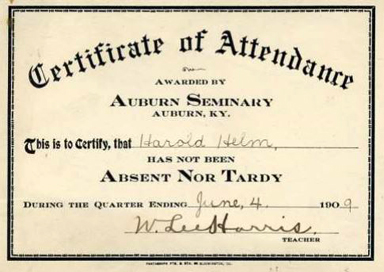
In the Manuscripts & Folklife Archives section of WKU’s Special Collections Library, we can see evidence not only of the club’s prestige but of the pleasure that its social events have given members hailing from southcentral Kentucky.  Auburn native Harold H. Helm (1900-1985), who attended Bowling Green’s Ogden College as a young man, joined The Kentuckians as soon as he arrived in New York to begin his distinguished career with the Chemical Bank & Trust Company.  Speaking at a club dinner in 1957, he delighted in telling stories of the exceptional characters he loved back home, such as his father-in-law, Warren Circuit Judge John B. Rodes.  Bowling Green native Phineas Hampton Coombs (1869-1919), who worked in New York from 1901-1918 as agent for the St. Louis Southwestern Railway, kept some of The Kentuckians’ dance and dinner programs, yearbooks and menus from what were undoubtedly glittering social events held at such New York landmarks as Delmonico’s Restaurant and the Plaza, Knickerbocker and St. Regis hotels.

The Kentuckians, needless to say, began as a male preserve, but in 1913 the club held a dinner to honor authors of both sexes who had contributed to the state’s literary fame.  Among those invited was Bowling Green native Lida Calvert Obenchain, who, under the pen name Eliza Calvert Hall, had published two highly successful short story collections, Aunt Jane of Kentucky and The Land of Long Ago.  Lida was also a tireless worker for women’s equality and voting rights.  When the after-dinner speaker, humorist Irvin S. Cobb, chivalrously noted that “In Kentucky, we don’t admit that women are our equals; we insist that they are our superiors,” Lida bristled.  “What on earth made you talk belated nonsense like that?” she demanded afterward.  “Aw, I’m a suffragist,” Cobb replied meekly, “but a fellow’s got to say something at a dinner!”

For more of our collections documenting the lives of distinguished Kentuckians, search TopSCHOLAR and KenCat.

Can’t find it in Helm-Cravens? Map It!

WKU Libraries is now offering StackMap, a software mapping program that provides patrons with a detailed map and written directions to an item with one click. Maps are printable, and also compatible with mobile browsers. Just search for your favorite titles in TOPCAT, scroll to the bottom of the page, and look for the button called “Map It!” The visual map will take you right to the floor and aisle you need to find your materials.

 wku.stackmap.com copy

Kudos from a fieldworker

DSC04586My name is Steve Goddard and I am a second-year graduate student in the Folk Studies Department at WKU.  I came back to school after a long hiatus because I wanted to create a gift for the people I love.  I’m not talking about my wife, kids or grandson (though I do love them) but the Kurds.  This Indo-European group from the Middle East, numbering 30-40 million, have long been marginalized and brutalized by strongmen.  As a result, they have emigrated in large numbers to the West, the largest population in the U.S. (10,000) settling in Nashville.  So, I return to the gift.

Though I had worked among Kurdish refugees for the majority of my adult life, I wanted to offer something new to them.  I wanted to conduct research and write a thesis about  Kurdish life, which could then be added to the comparatively small collection of scholarly work concerning them.  The greatest preponderance of what has been written speaks of their political life; conversely not much has been written of their folk life and that is what I want to offer.  Folk studies is grounded in fieldwork, moving beside and among a group of interest and my two years at WKU have prepared me well for that aspect of folkloric work.  However, as a thesis track student, there has been a professional void.  Gratefully, my work with the Manuscripts and Folklife Archives this semester has helped to fill it.

I have spent the last sixteen weeks processing individual collections of the Kentucky Folklife Program, which came to WKU from Frankfort in the fall of 2012.  I have organized and numbered and accessioned papers, slides, photographs and negatives, audio and video cassettes from fourteen collections, with subject matter as diverse as Burgoo festivals and Indian refugees and locations as disparate as Boyd County in the east and Union County in the west.  I have learned how to create finding aids and post them to Top Scholar, KenCat and Pass the Word.  And in the process, something more has been gained (i.e. filled the void). 

I’ve come to understand that prominent folklorists of our day were once just novice fieldworkers, cutting their teeth as they gathered the treasures of Kentucky’s rich traditional culture.  I’ve learned that the bond between fieldworker and archivist must be strong if the body of work produced by the former is to be preserved and presented by the latter.  A detail as simple as a missing birthdate in fieldnotes can greatly encumber those accessing the archival material in the future.  Lastly, I’ve gained a great respect for those on the other side of fieldwork, the archivists, who take what is gathered in face to face interaction and labor with boxes, folders and pencils to preserve that ethos for generations to come.

Sookie Stackhouse creator Charlaine Harris to headline 2014 SOKY Book Fest

Bowling Green, Ky. –New York Times bestselling author Charlaine Harris will headline the 16th annual Southern Kentucky Book Fest scheduled for Saturday, April 26, 2014. Born and raised in the Mississippi River Delta area, Harris has been writing for thirty years and is best known for her Sookie Stackhouse series.

“We’ve invited Charlaine to Book Fest for several years, but scheduling conflicts have prevented her from coming. Happily, we contacted her early enough to get on her schedule for 2014,” said Kristie Lowry, Literary Outreach Coordinator for WKU Libraries and Book Fest organizer. “The Book Fest partnership strives to invite authors who will have broad appeal, and Charlaine’s fans include young adult and adult readers–men and women–and her appearance will also pull fans of the show True Blood to Book Fest. We are thrilled to have Charlaine Harris coming to Bowling Green next April.”

Harris began writing plays when she attended Rhodes College in Memphis, Tennessee, switching to novels a few years later and published her first book, Sweet and Deadly, in 1981. After publishing two stand-alone mysteries, Harris launched the lighthearted Aurora Teagarden books with Real Murders, a Best Novel 1990 nomination for the Agatha Awards. Harris wrote eight books in her series about a Georgia librarian. In 1996, she released the first in the much darker Shakespeare mysteries, featuring the amateur sleuth Lily Bard, a karate student who makes her living cleaning houses. Shakespeare’s Counselor, the fifth—and last– was printed in fall 2001.

After Shakespeare, Harris created an urban fantasy series about a telepathic waitress named Sookie Stackhouse who works in a bar in the fictional Northern Louisiana town of Bon Temps. Each book follows Sookie through her adventures involving vampires, werewolves, and other supernatural creatures. The series has been released worldwide and is so popular that writer and producer Alan Ball created the HBO series True Blood based on Harris’s novels. 

SOKY Book Fest is a partnership project of WKU Libraries, Warren County Public Library, and Barnes and Noble Booksellers. For more information, visit the website at sokybookfest.org or contact Book Fest organizer Kristie Lowry at WKU Libraries at (270) 745-4502.

“Kentucky County Stars: Illustrious Kentuckians”

WKU Visual Resources Librarian Nancy Richey

   WKU Visual Resources Librarian Nancy Richey and retired newspaper publisher Roger Givens presented “Kentucky County Stars: Illustrious Kentuckians” as part of the “We’ve Been Everywhere” program on Tuesday, April 23 in the Helm Library on WKU’s campus.  Rogers and Givens presented images and brief synopses of famous entertainers, politicians, and other influential figures throughout history who originated form our Bluegrass state.

May Reference Area Book Display

lovely

As the weather warms and our students head back home, the reference area displays books about horticulture to inspire beautiful gardens!

Books on display:

  1. Tour of the flowering plants : based on the classification system of the Angiosperm Phylogeny Group / texts and photographs by Priscilla Spears.  QK495.A1 S6 2006
  2. Wildflowers of the eastern United States / by Wilbur H. Duncan and Marion B. Duncan. QK115 .D86 1999
  3. Plant life of Kentucky : an illustrated guide to the vascular flora / Ronald L. Jones ; with the assistance of John W. Thieret and Charles J. Lapham. QK162 .J66 2005
  4. Wildflowers and ferns of Kentucky / Thomas G. Barnes and S. Wilson Francis.  QK162 .B37 2004
  5. Rodale’s encyclopedia of indoor gardening / edited by Anne M. Halpin.  SB419 .R74
  6. Encyclopedia of gardens : history and design / editor, Candice A. Shoemaker.  SB465 .E63x 2001
  7. Herbs : the gardener’s guide / text by Patrick Lima ; photographs and illustrations by Turid Forsyth.  SB351.H5 L56x 2001
  8. American Horticultural Society encyclopedia of plants & flowers / editor-in-chief, Christopher Brickell.  SB403.2 .A438 2011